Solar energy has become one of the most reliable and sustainable power sources in the modern world. But have you ever wondered how solar panels actually generate electricity from sunlight? The science behind it is both fascinating and innovative.
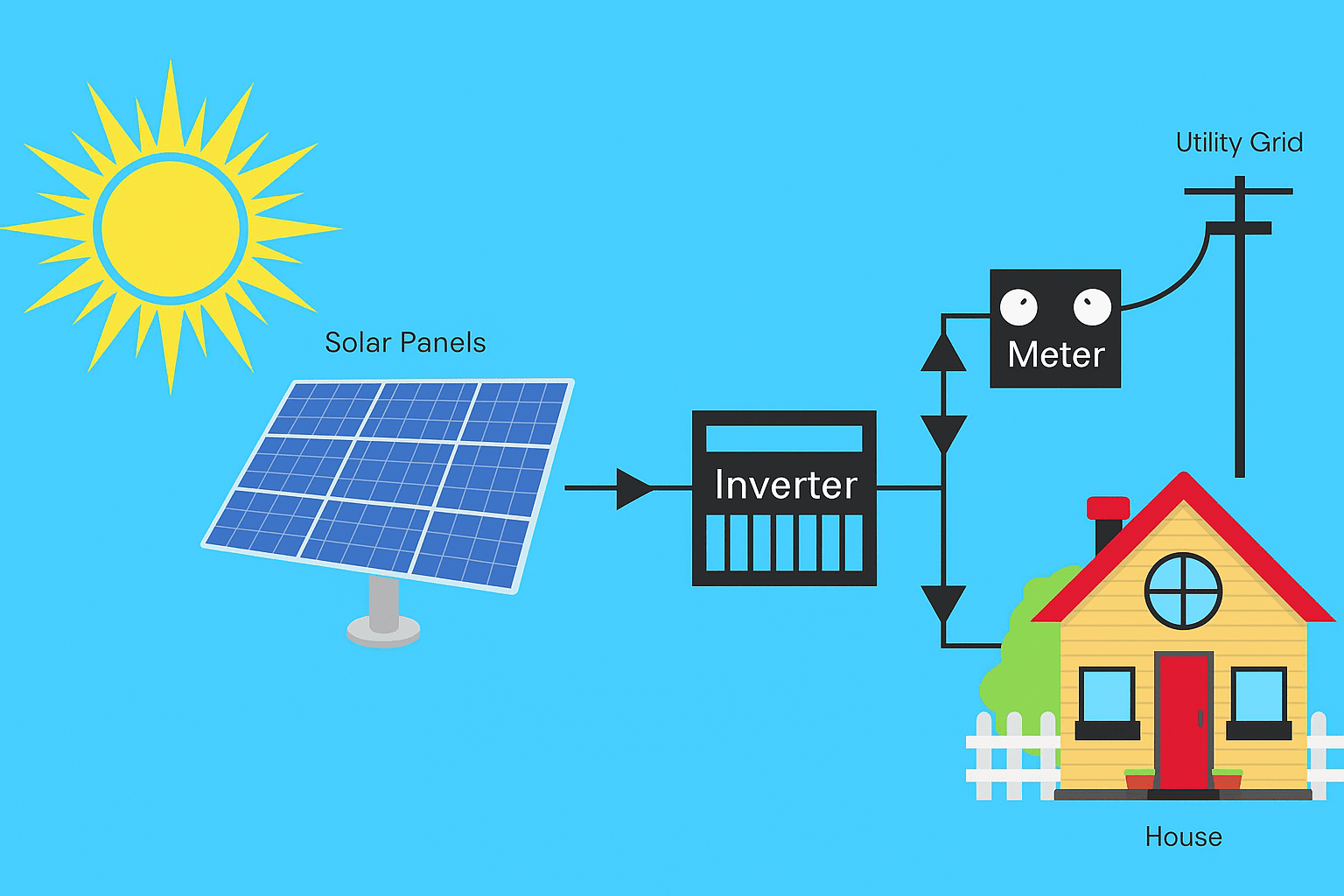
Solar panels are made up of multiple photovoltaic (PV) cells, usually created from silicon. These cells absorb sunlight and convert it into direct current (DC) electricity. This process is known as the photovoltaic effect.
When sunlight hits the panel, photons from the sun knock electrons loose in the silicon cells. This movement of electrons creates an electric current, which is the first step in producing usable solar power.
Since homes and businesses typically run on alternating current (AC), the DC power from the panels is passed through a solar inverter. The inverter transforms DC into AC, making it compatible with household appliances and the power grid.
Excess solar power can often be stored in solar batteries or fed back into the grid through net metering, reducing electricity bills and increasing energy independence.
The efficiency of solar panels depends on factors like sunlight exposure, panel quality, and installation angle. Modern panels can capture energy even on cloudy days, ensuring consistent output.
By using solar panels, homeowners not only save money but also contribute to reducing carbon emissions, making it a smart choice for a sustainable future.
In simple terms, solar panels harness the energy of the sun, convert it into electricity, and power our daily lives, all while protecting the planet.