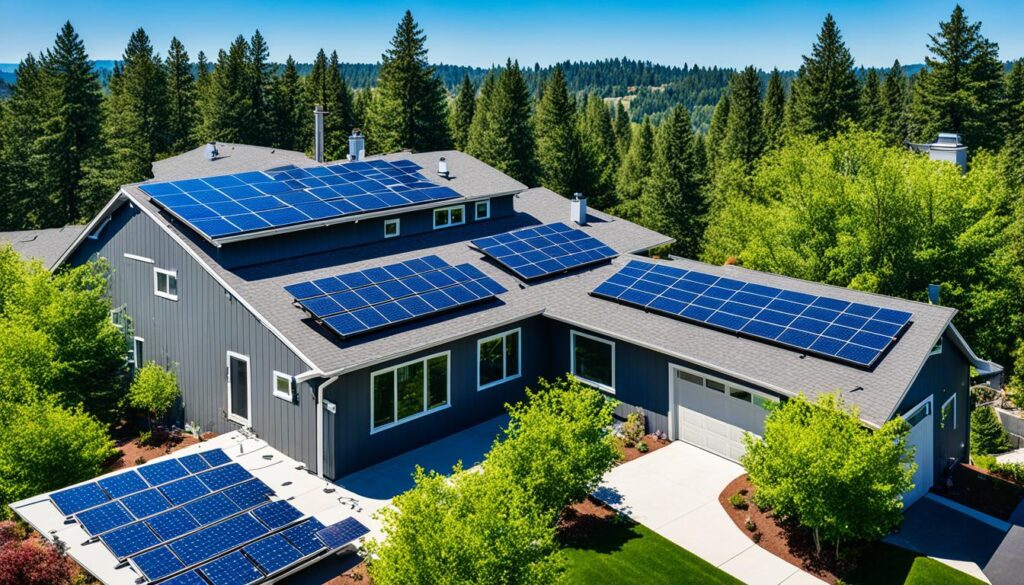
The truth is, solar panels don’t need direct, blazing sunlight to work. They can still generate electricity during cloudy or rainy days — just at a slightly reduced efficiency.
Let’s explore how solar panels perform in less-than-perfect weather conditions and why you can still rely on them year-round.
How Solar Panels Work
Solar panels are made up of photovoltaic (PV) cells that convert sunlight into electricity.
When sunlight hits the cells, it excites the electrons inside, generating an electric current. This electricity can be used immediately or stored in batteries for later use.
The stronger the sunlight, the more electricity produced. However, even diffused sunlight (when the sky is cloudy) still contains photons that the panels can capture and convert into power.
Do Solar Panels Work on Cloudy Days?
Yes — solar panels do work on cloudy days.
However, their efficiency typically drops to 10–25% of their normal capacity, depending on the thickness of the clouds.
For example:
• Light clouds: 75–90% of normal efficiency.
• Thick clouds or monsoon weather: 10–30% efficiency.
Interestingly, some of the best solar-powered countries like Germany and the U.K. receive fewer sunny days than India, yet solar energy still thrives there thanks to modern, high-efficiency panels.
Can Solar Panels Work During Rain?
Yes, and rain can actually help your solar system.
During rainfall:
• Power generation decreases due to reduced sunlight.
• But rain cleans the panel surfaces, removing dust and debris that block sunlight.
Once the rain stops and sunlight returns, cleaner panels perform better, improving overall efficiency.
Some advanced research panels are also being developed that can generate electricity from rain droplets, though these are not yet commercially available.
Solar Performance in Indian Weather
In India’s tropical climate, the monsoon season brings several weeks of rain and cloud cover.
Even during these periods, solar systems continue working — though with lower output.
Here’s an approximate breakdown:
• Sunny days: 100% output
• Partly cloudy: 60–80% output
• Rainy or overcast: 20–40% output
Because India enjoys 300+ sunny days per year, solar systems still deliver excellent annual performance.
Tips to Maximize Solar Efficiency During Rainy Days
1. Use High-Efficiency Solar Panels
Choose Tier-1 panels with better low-light performance, like monocrystalline panels, which work well in cloudy conditions.
2. Keep Panels Clean and Maintained
Dust, bird droppings, and debris reduce efficiency. Rain helps wash some of it off, but a regular cleaning schedule ensures consistent output.
3. Add a Battery Backup
With a solar battery system, you can store excess energy produced during sunny hours and use it during rainy or nighttime periods.
4. Use MPPT Inverters
Maximum Power Point Tracking (MPPT) inverters adjust to changing sunlight conditions automatically, improving power generation even under clouds.
5. Consider Net Metering
If your system produces more energy on sunny days, you can export it to the grid and use credits during low-generation days.
Conclusion
Solar panels absolutely work during rain and cloudy weather, though at reduced capacity.
They are designed to function in all seasons — rain, shine, or clouds — making them a reliable source of clean energy throughout the year.
With India’s abundant sunshine and government incentives, solar remains one of the best long-term investments for homeowners and businesses, rain or shine.