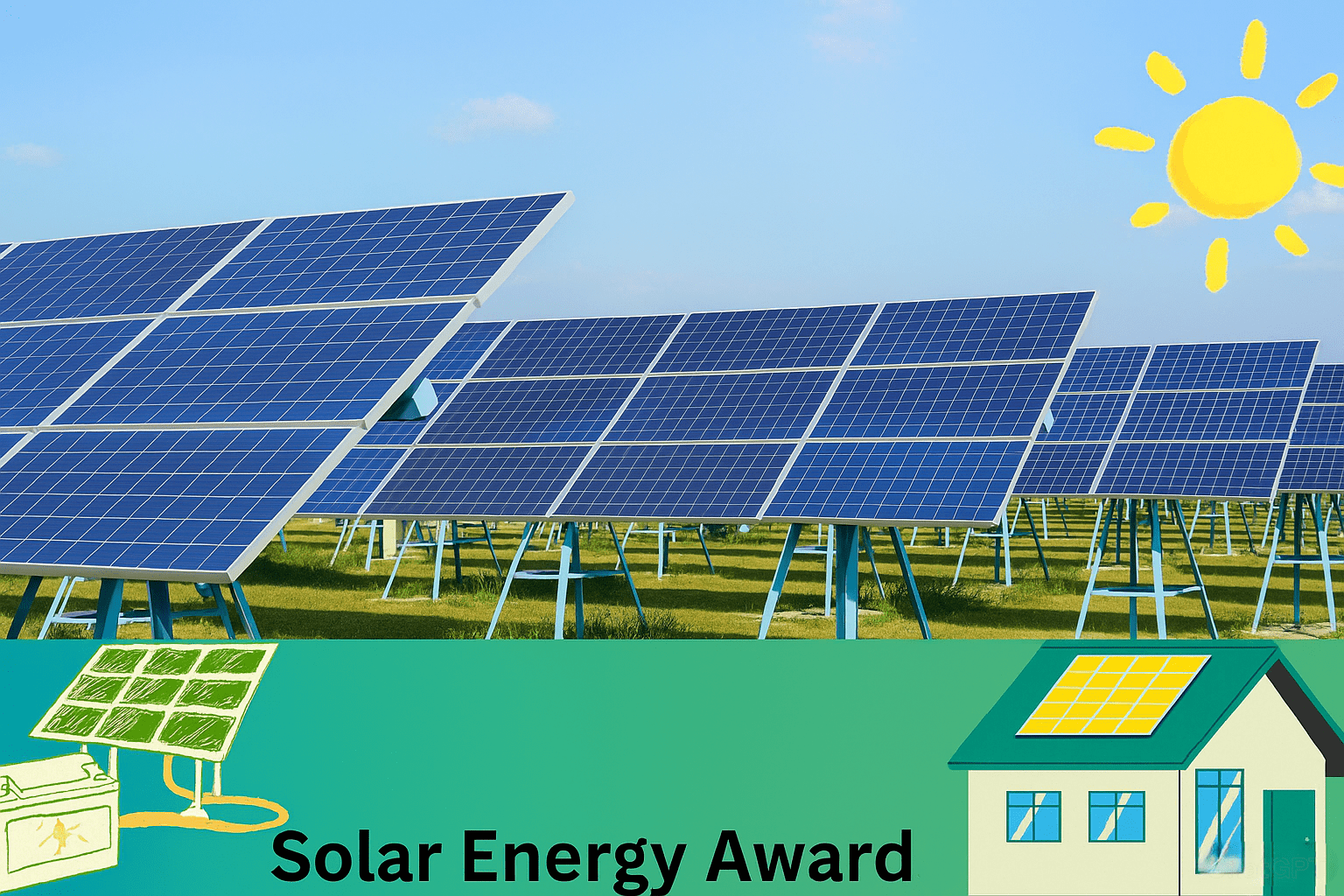
India’s rooftop solar story is undergoing a major shift. What was once dominated by big metros and large commercial installations is now expanding into Tier-2 and Tier-3 cities. These smaller cities are poised to become growth engines for residential and commercial rooftop solar systems.
Why Tier-2 Cities Are Becoming Solar Hotspots:
Several recent developments explain why rooftop solar is gaining momentum in India’s mid-sized cities:
• According to one story, “India’s rooftop solar boom: How Tier-2 cities are leading the 2025 adoption wave,” middle-income households in Tier-2 cities are increasingly choosing solar because of better roof availability, subsidies, and pay-back potential.
• Data shows rooftop solar additions jumped significantly: India installed about 3.2 GW of rooftop solar in 2024, up ~88 % from 2023.
• Cost declines in solar modules, inverters, and installation services are making rooftop solar more affordable in smaller cities.
• Financing options (EMIs, rooftop-as-service, OPEX models) are emerging, making rooftop solar accessible to the middle class in Tier-2 towns.
What Makes Tier-2 Cities Conducive for Rooftop Solar:
| Factor | Advantage in Tier-2 Cities |
| Roof availability | Homes often with larger, less-shaded rooftops than dense metros |
| Rising electricity demand | Many Tier-2 cities see rising consumption, making rooftop solar economically attractive |
| Local installer ecosystem | Smaller markets often allow local vendors to set up quickly and service reliably |
| Government & scheme support | National schemes (e.g., Pradhan Mantri Surya Ghar Muft Bijli Yojana) and state outreach drive offtake in non-metro areas |
Emerging Growth Drivers & Trends:
1. Better Economics & Shorter Pay-Back
With lower upfront costs and rising grid tariffs, the returns on rooftop solar in Tier-2 cities are improving. According to analysts, distributed solar (including rooftop) is set to shape the next decade of India’s energy transition.
2. Hybrid Systems & Integration
Rooftop solar is increasingly paired with battery storage and EV charging infrastructure — especially relevant for growing Tier-2 cities. A market-outlook report notes hybrid and rooftop-EV combos being a big focus.
3. Virtual & Peer-to‐Peer Models
New business models like virtual net-metering, peer-to-peer rooftop solar ownership are emerging, enabling apartments, rentals, and smaller homes in Tier-2 towns to participate.
4. Localized Supply Chains & Services
Manufacturers and installers are increasingly focusing on Tier-2 markets — building local service hubs, reducing logistics costs, and enabling quicker installations.
What This Means for Homeowners & Small Businesses:
• More affordable systems: With subsidies, financing, and local installers, the barrier to rooftop solar is lowering.
• Improved value proposition: In Tier-2 cities, systems can offer shorter pay-back periods due to reasonable rooftop sizes plus decent sunlight.
• Greater involvement: Homeowners, housing societies, and small businesses can adopt solar and reduce electricity bills, increasing resilience.
• New ownership models: Leasing, rooftop-as-service, and community solar models make solar access easier even for those without large roofs or capital.
Challenges & What Needs to Be Addressed:
Even as rooftop solar in Tier-2 cities advances, some obstacles remain:
• Awareness & trust: Many homeowners still lack clarity on solar economics, vendor reliability, and long-term maintenance.
• Quality and service: Ensuring installations are done properly, with good warranties, after-sales support, especially in smaller markets.
• Grid integration / Net-metering: Local utilities must have clear, simple rules for rooftop systems in smaller cities where infrastructure may be less modern.
• Financing: While improving, access to low-cost capital for middle-income homeowners is still a challenge.
• Rooftop suitability: Shade, orientation, and structural strength of roofs matter. Tier-2 city roofs vary widely.
The Road Ahead (2025-2030):
Looking forward, several trends will shape rooftop solar in Tier-2 cities:
• Mass adoption campaigns: With government targets and schemes, expect rapid growth of rooftop solar in mid-sized cities. For example, rooftop installations are projected to double to ~4 million households by March 2026.
• Community & shared solar models: Housing societies, apartment blocks, and small businesses will co-invest in rooftop solar or community systems.
• Integration with urban planning: New residential developments in Tier-2 cities may come with rooftop solar as standard or integrated with EV charging.
• Smarter operations: Digital tools, remote monitoring, and maintenance via apps will become standard even in smaller towns.
• Emergence of microgrids: In satellite towns or peri-urban areas, rooftop + storage + local microgrid solutions may become common to improve reliability.
• Local economic boost: Growth of installers, service businesses, local manufacturing, and jobs in these cities.
Final Thoughts:
The future of rooftop solar in India’s Tier-2 cities is bright. These cities offer the perfect mix of opportunity: growing demand, accessible roofs, improving economics, and evolving business models.
For homeowners, small business owners, and local installers in Tier-2 towns:
• Now is a great time to evaluate rooftops and talk to trusted solar vendors.
• Expect increasing choice, better financing, and improved returns.
• Be part of a broader shift — where not just big metros, but smaller cities also become clean energy hubs.
In short: rooftop solar is no longer only for big city high-rises or large industrial roofs — it’s increasingly accessible for everyday homes and businesses in smaller cities across India.