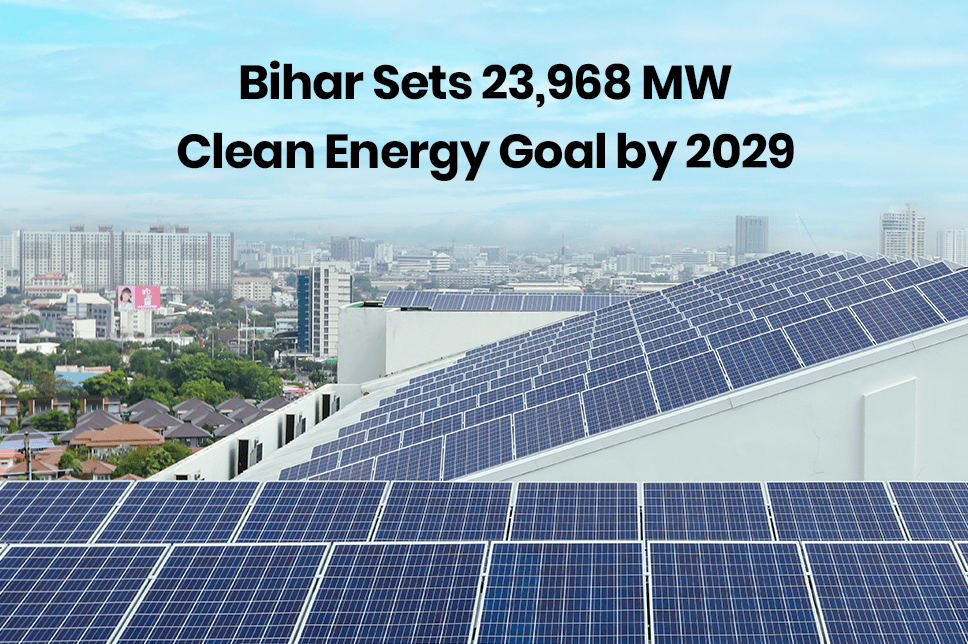
Bihar, a state rich in agriculture and growing urban development, is taking strong steps toward energy independence and sustainability. The Bihar Solar Policy aims to accelerate the adoption of solar power across households, businesses, rural communities, and industries. With high solar irradiation and rising electricity demand, Bihar is positioning itself to become a key clean energy state in Eastern India.
Key Objectives of the Bihar Solar Policy:
The policy, led by the Bihar Renewable Energy Development Agency (BREDA), focuses on:
• Increasing solar power capacity across the state
• Encouraging rooftop solar adoption in cities and towns
• Promoting off-grid solar solutions for rural and remote areas
• Supporting private investment and green industry growth
• Reducing dependence on thermal power and diesel generators
Rooftop Solar for Homes and Businesses:
Bihar encourages households, schools, hospitals, offices, and commercial units to install rooftop solar systems under net metering.
• Up to 40% subsidy available for residential systems up to 3 kW (as per MNRE scheme).
• Consumers can export surplus solar energy back to the grid to lower electricity bills.
This makes rooftop solar affordable and attractive for both urban and semi-urban users.
Solar for Agriculture and Rural Electrification:
For villages where grid connectivity is limited or unstable, the policy promotes:
• Solar pumps under PM-KUSUM, reducing fuel costs for farmers
• Mini and micro-grids for remote communities
• Solar street lighting and village electrification programs
These initiatives support rural livelihoods and reduce diesel dependency.
Solar Parks and Private Investment:
The state is developing land banks in districts like Gaya, Nalanda, Banka, and Kaimur to attract utility-scale solar projects.
Investors receive:
• Single-window project clearances
• Exemptions on electricity duty
• Open access flexibility for power sale to industries
This helps boost renewable capacity and industrial growth.
Benefits for Bihar:
| Economic | Environmental |
| Lower power costs | Reduced carbon emissions |
| More local jobs in solar services | Cleaner and healthier environment |
| Growth of green industries | Reduced dependence on fossil fuels |
Conclusion:
The Bihar Solar Policy is a major step toward a cleaner, self-reliant energy future. By promoting rooftop solar, rural electrification, and private investment, Bihar is moving closer to becoming a solar-powered state that benefits citizens, farmers, and industries alike.
Bihar’s sunshine is ready — and now the state is powering its progress with it.