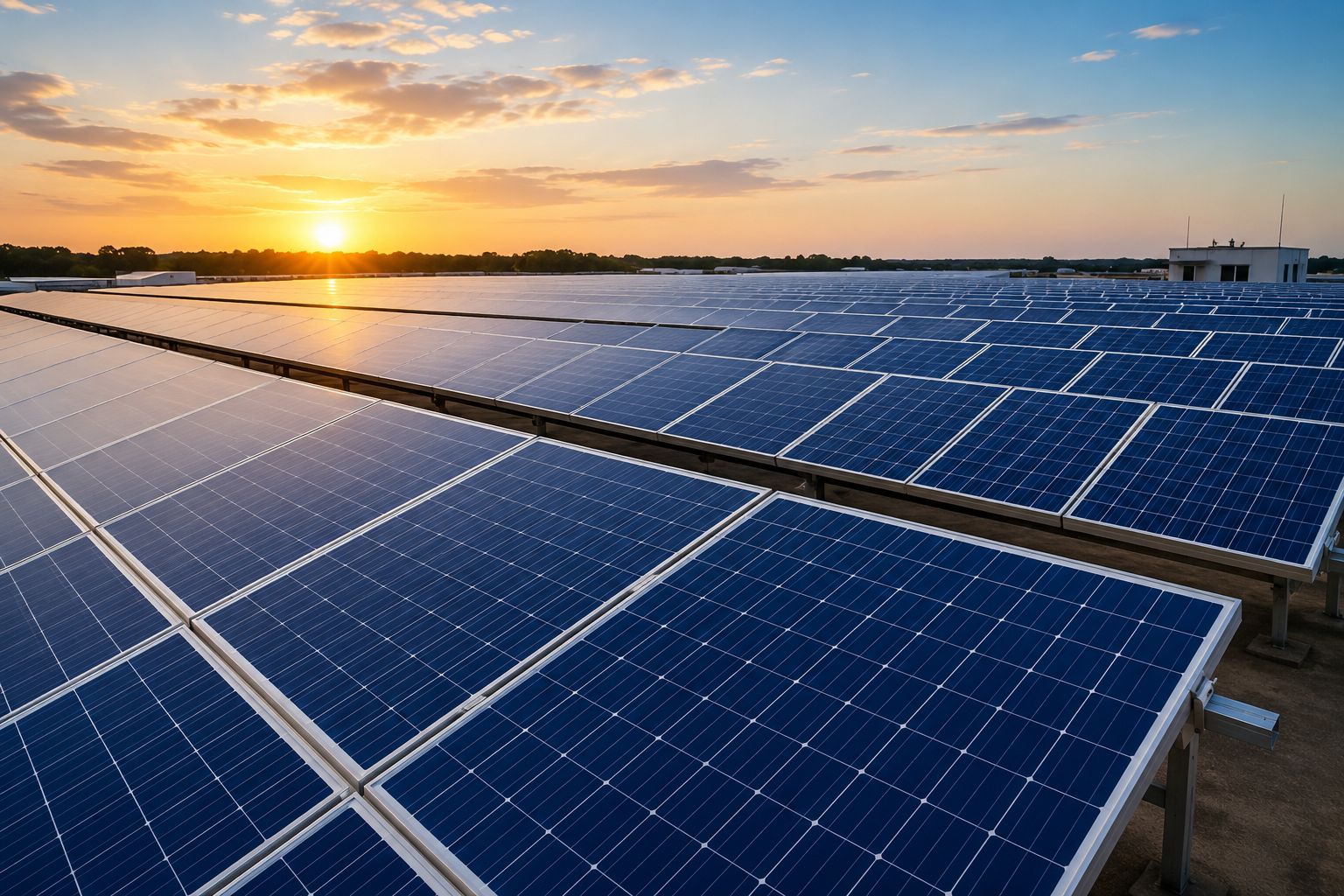
India has made remarkable progress in expanding renewable energy, emerging as one of the world’s fastest-growing solar markets. With the country’s installed solar capacity surpassing 162 GW, solar power has become a key pillar of India’s clean energy transition. However, the next phase of growth is not just about installing more renewable energy projects—it is about building a strong domestic manufacturing ecosystem for solar and battery technologies.
Although India is reducing its dependence on imported fossil fuels, a large share of the equipment used in solar projects, including solar cells and other critical components, continues to come from overseas. This dependence raises concerns about long-term energy security and highlights the need to strengthen domestic production across the renewable energy supply chain.
Battery Energy Storage Systems (BESS) are also becoming increasingly important as renewable energy capacity grows. Since solar power generation is highest during the day while electricity demand often peaks in the evening, energy storage solutions are essential for ensuring a stable and reliable power supply. Developing domestic battery manufacturing will play a crucial role in supporting this transition.
India has already made significant progress in solar module manufacturing, but key upstream processes such as polysilicon production, wafer manufacturing, and solar cell fabrication still require greater investment. Expanding capabilities in these areas would reduce import dependence and improve the resilience of the country’s renewable energy sector.
To encourage local manufacturing, the Government has introduced several initiatives, including the Basic Customs Duty (BCD), the Approved List of Models and Manufacturers (ALMM), domestic content requirements, and the Production Linked Incentive (PLI) scheme. These measures are helping attract investment, but continued focus on advanced manufacturing technologies and research will be essential to compete globally.
The battery sector is following a similar path. Government programmes such as the Advanced Chemistry Cell (ACC) PLI Scheme, Energy Storage Obligation (ESO), and Viability Gap Funding (VGF) are supporting the growth of battery manufacturing. However, much of the current investment is focused on battery pack assembly, while production of battery cells and critical raw materials remains limited.
Experts believe that India’s long-term clean energy goals will depend not only on expanding renewable energy capacity but also on developing a strong domestic manufacturing base for solar panels, battery cells, and energy storage technologies. Investing in innovation, advanced manufacturing, research, and resilient supply chains will help the country achieve greater energy security while reducing reliance on imported technologies.
As India continues its renewable energy journey, strengthening local manufacturing will be just as important as adding new solar and battery projects. A balanced approach that combines large-scale renewable deployment with domestic industrial growth will help create a more self-reliant, sustainable, and globally competitive clean energy sector.