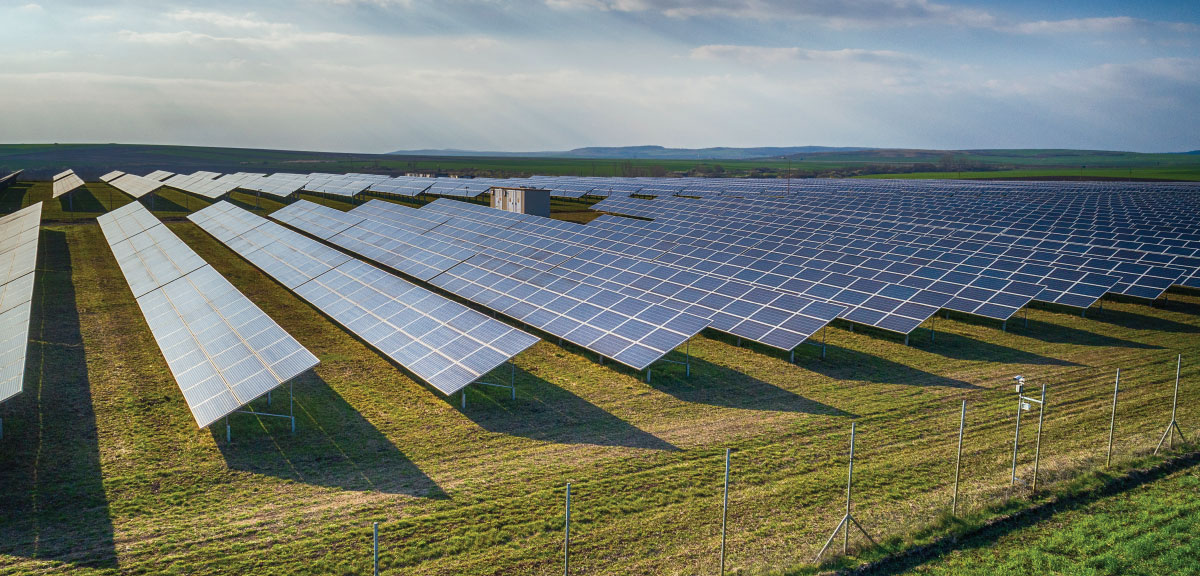
Solar farms are transforming the way we produce energy, turning sunlight into big opportunities for growth. Utility-scale solar projects are now not limited to clean energy, but it’s a chance to make smart and profitable moves in this ever-evolving renewable sector. Now, large-scale solar farm investment is proving to be sustainable and financially rewarding.
What Is a Solar Farm?
A solar farm is a large area of land covered with solar photovoltaic (PV) panels that convert sunlight into electricity.
Unlike rooftop systems, solar farms are ground-mounted and usually connected to the national grid through a power purchase agreement (PPA).
They can be classified into two major types:
a. Utility-Scale Solar Farm
• Capacity: 1 MW to 1,000 MW or more
• Purpose: Generate electricity for the grid or power utilities.
• Typical use: Large-scale investors, developers, or government projects.
b. Community or Private Solar Farm
• Capacity: 100 kW to 1 MW
• Purpose: Supply power to local users or specific organizations.
• Typical use: Housing societies, industries, or business clusters.
How Does a Solar Farm Work?
1. Solar Panels capture sunlight and convert it to DC power.
2. Inverters convert DC into AC electricity.
3. Transformers step up voltage for grid transmission.
4. Power is supplied to the grid or a local network through a PPA.
Some solar farms may include battery storage systems to ensure steady power delivery during cloudy or peak demand hours.
How Much Does It Cost to Build a Solar Farm?
The cost to build a solar farm can vary widely depending on size, location, and regulatory requirements, but utility-scale projects typically benefit from economies of scale compared to rooftop systems. According to SEIA and BloombergNEF data, the average utility-scale solar cost in 2025 ranges from $0.90 to $1.20 per watt.
For perspective:
• A 1 MW solar farm may cost between $1–1.2 million.
• A 5 MW project could require $5–6 million.
• A 50 MW utility-scale solar farm might reach $45–55 million, though per-watt costs decrease significantly at this scale.
Several factors contribute to total solar farm cost:
• Land Acquisition – Costs vary by region but typically require 5–10 acres per MW.
• Labor & Construction – Installation, racking, and electrical work form a major portion of expenses.
• Permitting & Compliance – Local approvals, environmental studies, and interconnection fees add both time and cost.
• Equipment & Inverters – Beyond panels, inverters and transformers are essential for grid connection.
• Insurance & Operations – Long-term insurance and maintenance must be factored into a solar farm investment model.
Pros of Solar Farms:
• Stable Long-Term Returns – A 1 MW plant can generate around 1.5 million units/year, earning steady income via PPA.
• Low Maintenance – Minimal operational costs after installation.
• Clean & Sustainable – Reduces CO₂ emissions and promotes green energy.
• Government Support – Policies like Accelerated Depreciation (AD), Viability Gap Funding (VGF), and Renewable Purchase Obligations (RPO) encourage investment.
• Job Creation – Generates employment in the construction, operation, and maintenance sectors.
Cons of Solar Farms:
• High Initial Investment – Capital-intensive, especially for large capacities.
• Land Availability – Finding affordable, unshaded, and grid-connected land can be challenging.
• Intermittent Energy Source – Generation depends on sunlight; it requires backup or storage systems.
• Maintenance Challenges – Dust accumulation and bird droppings can affect efficiency in remote locations.
• Regulatory Approvals – Projects require environmental, DISCOM, and state nodal agency clearances.
Conclusion:
Solar farms are a profitable and sustainable investment opportunity in India’s renewable energy future.
While the initial investment is substantial, the long-term returns, government support, and 25-year operational lifespan make solar farms a powerful option for investors and developers.