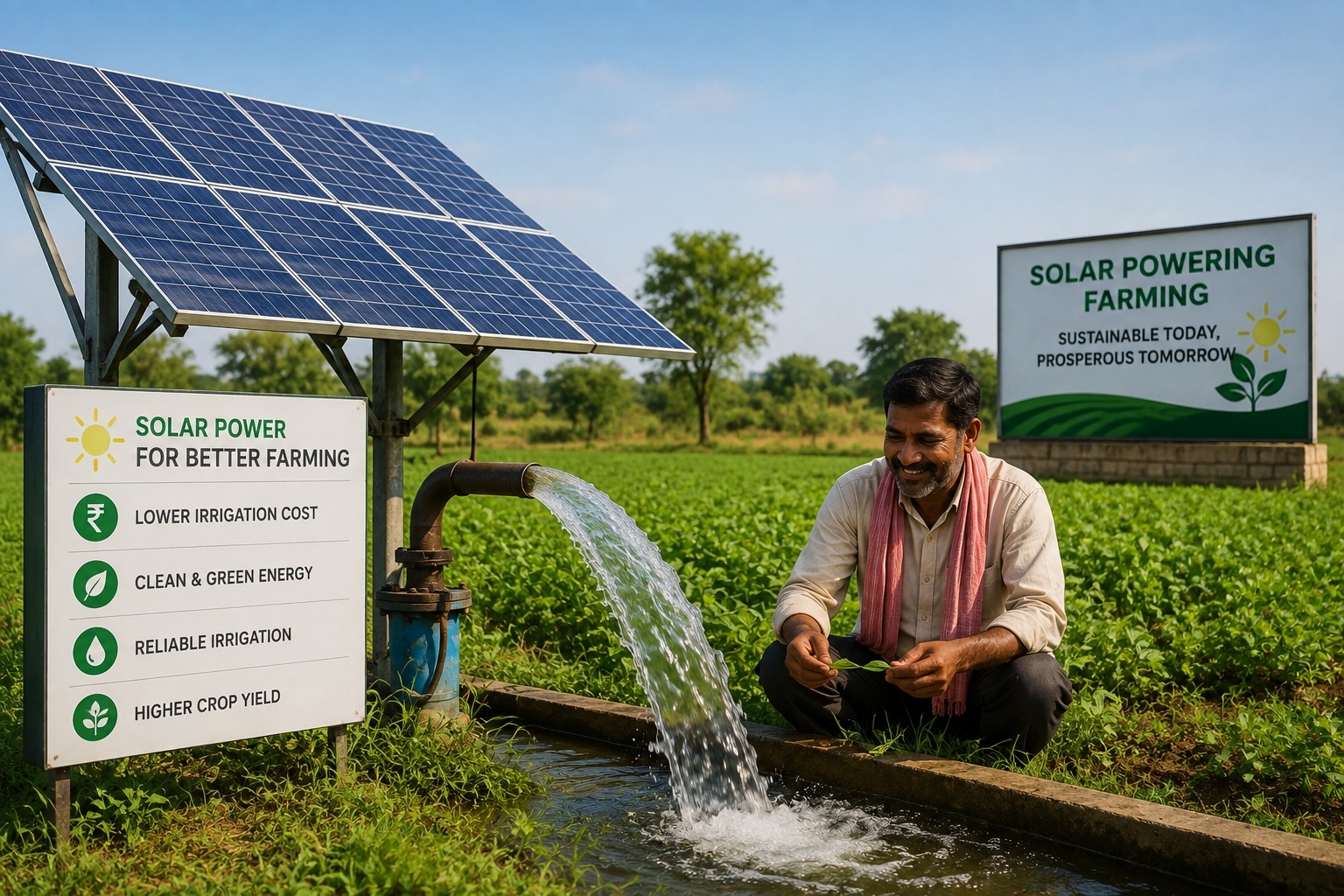
A farmer in West Singhbhum, Jharkhand, has demonstrated the benefits of using solar power for agricultural operations, particularly irrigation. The shift to solar energy has helped reduce dependence on conventional fuel, lower operating costs and provide more reliable access to irrigation.
Diesel-powered irrigation pumps can create a significant financial burden for farmers because of recurring fuel expenses. Solar-powered irrigation offers an alternative by using sunlight to generate electricity for agricultural activities, reducing the need for diesel or petrol.
The farmer’s experience highlights how solar irrigation can provide long-term savings while supporting more consistent farm operations. With access to solar power during daylight hours, irrigation can be planned according to crop requirements and weather conditions.
Reliable irrigation can also contribute to better crop growth and improved yields, particularly in areas where rainfall is unpredictable or electricity supply is limited. Lower energy costs combined with higher agricultural productivity can improve overall farm income.
Solar-powered farming can also reduce the environmental impact of agricultural operations by replacing fossil-fuel-powered pumps with renewable energy. This can help lower operational emissions while reducing farmers’ exposure to fluctuations in fuel prices.
The development highlights the potential of decentralised solar solutions in rural India, where reliable and affordable energy can support agricultural livelihoods. Wider adoption of solar irrigation, supported by suitable financing, technical assistance and maintenance services, could help farmers improve productivity while reducing energy expenses.
The West Singhbhum example demonstrates how solar energy can provide economic, agricultural and environmental benefits at the farm level, supporting India’s broader transition towards cleaner and more sustainable rural energy solutions.