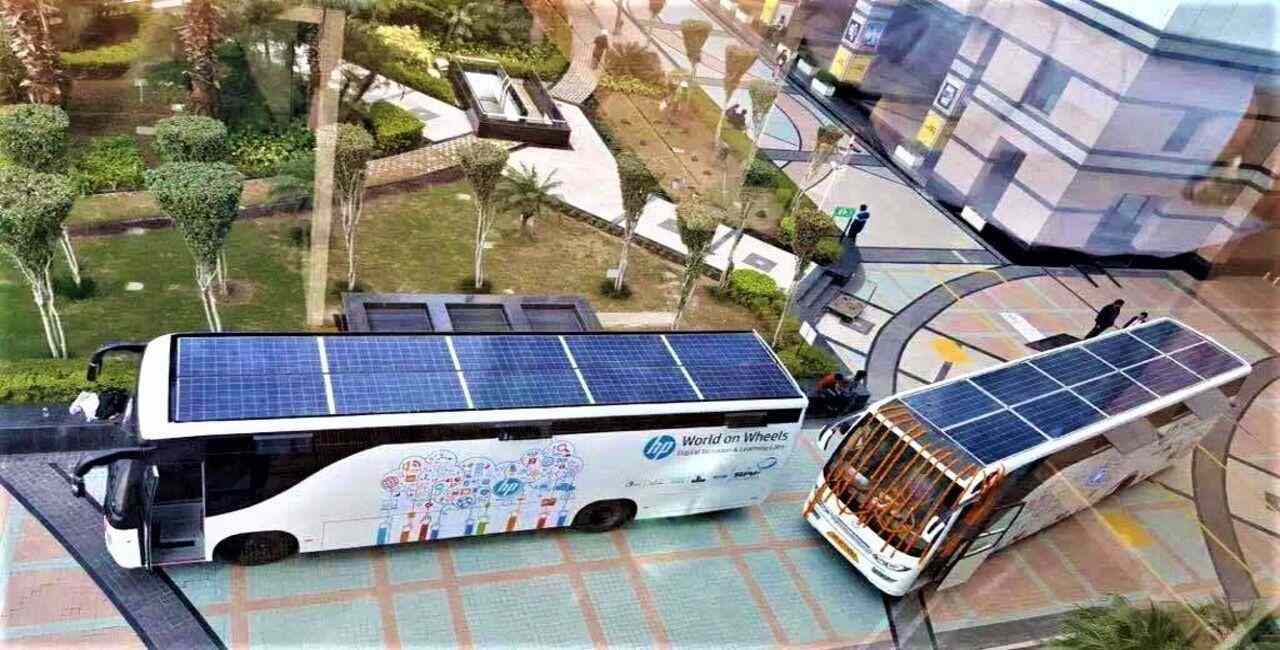
As India accelerates its journey towards clean mobility, solar-powered transportation is emerging as a promising solution. With rising fuel costs and increasing carbon emissions, solar energy offers a sustainable pathway to reshape the country’s transport sector.
Solar-Powered Vehicles and Infrastructure:
Solar-powered cars, buses, and even two-wheelers are gradually making their presence felt. Although still in the early stages, pilot projects and prototypes showcase how solar panels integrated into vehicles or charging stations can significantly cut down dependence on fossil fuels. The development of solar-powered EV charging stations across cities is further strengthening this ecosystem, ensuring a clean energy supply for electric mobility.
Advantages for India:
For a country that enjoys over 300 sunny days annually, solar-powered transportation presents immense potential. It reduces greenhouse gas emissions, lowers operational costs, and enhances energy independence. Rural and semi-urban areas, where charging infrastructure is limited, can especially benefit from decentralized solar-powered solutions.
Future Outlook:
Government initiatives such as FAME II and the National Electric Mobility Mission, coupled with solar energy subsidies, are laying the foundation for integrating solar into transportation. Industry experts predict that within the next decade, India could witness a rise in solar-integrated EV fleets, solar-powered public buses, and smart solar highways equipped with energy-generating panels.
The future of solar-powered transportation in India looks bright, driven by innovation, policy support, and sustainability goals. While challenges such as cost, efficiency, and scalability remain, the fusion of solar energy with mobility promises to redefine India’s transport landscape. It is not just a futuristic concept, it is a vital step towards achieving cleaner, greener, and more energy-secure mobility.