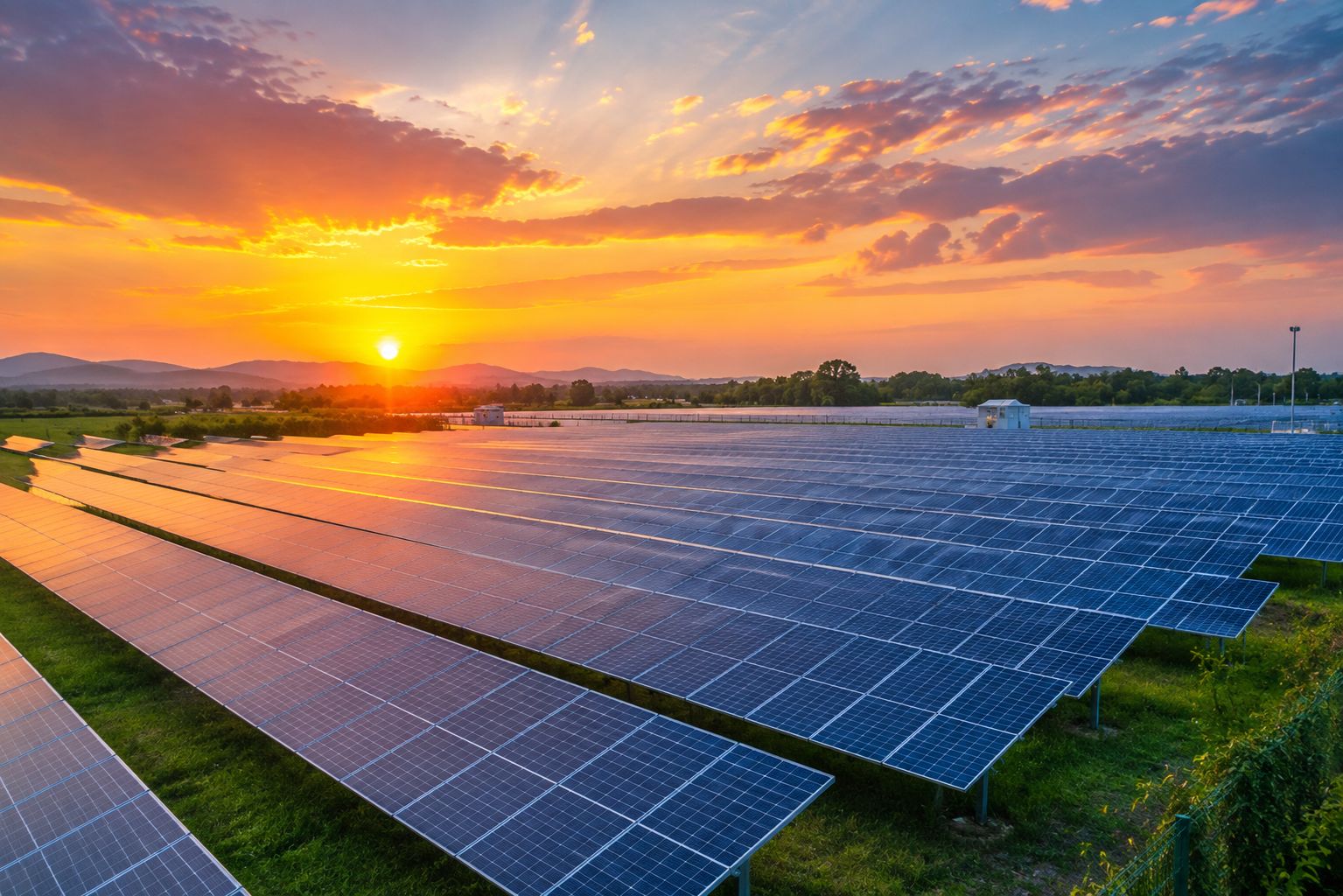
India is expected to add more solar capacity in 2026 than ever before, with annual installations projected to exceed 50 GWdc, according to a new report by Wood Mackenzie.
The country added around 34 GWdc of solar capacity during the first half of 2026, representing a 38% increase compared with the same period last year. Developers accelerated project commissioning ahead of the implementation of the Approved List of Models and Manufacturers-II (ALMM-II) requirements.
If the current pace continues, India could surpass its previous annual record of 49 GWdc set in 2025.
ALMM-II Puts Pressure on Solar Supply Chain
Wood Mackenzie said India’s ALMM-II policy is an important step toward developing a domestic solar manufacturing ecosystem. However, the country’s solar cell manufacturing capacity has not expanded as quickly as module production.
The resulting supply shortage is expected to increase costs for developers in the short term. Wood Mackenzie estimates that utility-scale solar system prices could rise by around 20% by Q4 2026.
Solar Additions May Slow in the Second Half
Although the first half of 2026 saw strong installation activity, solar additions could moderate during the second half.
The ALMM-II requirement means government-supported projects must use modules manufactured with domestically produced solar cells. At the same time, the phased reduction of inter-state transmission charge waivers is adding further pressure to project economics.
However, certain exemptions remain available for net-metering and open-access projects until December 31, 2026. MNRE has also provided limited relief for projects that were already nearing completion.
Import Dependence Shifts Toward Southeast Asia
While ALMM-II is intended to reduce India’s dependence on Chinese solar cells, imports remain an important part of the supply chain.
Solar cell sourcing has increasingly shifted toward Southeast Asian markets, with Indonesian cell imports rising significantly during the first months of 2026. India imported approximately 5 GW of wafers and 20 GW of solar cells during the first five months of the year.
This shift could attract greater scrutiny over possible circumvention of trade restrictions and the origin of imported solar components.
Domestic Cell Manufacturing Remains the Key Challenge
According to Wood Mackenzie, delays in commissioning approximately 14 GW of cell manufacturing capacity currently under construction could further tighten domestic supply.
India is expected to significantly expand cell manufacturing capacity over the next few years, with around 130 GW of additional capacity projected by 2029. However, supply may remain constrained in 2027 as manufacturers ramp up production and face utilisation challenges.
Wood Mackenzie estimates that domestic cell production could reach 29 GW in 2027, compared with average annual module demand of around 50 GW.
Solar Prices Expected to Stabilise Over Time
The consultancy expects solar equipment and system prices to gradually stabilise as additional domestic cell manufacturing capacity becomes operational.
However, the near-term transition is likely to remain challenging for developers, manufacturers and policymakers. Policy consistency, timely commissioning of manufacturing facilities and stronger domestic supply chains will be critical to controlling costs.
India’s planned ALMM-III, expected in 2028, could further extend domestic manufacturing requirements to solar wafers, reinforcing the country’s long-term push toward an integrated solar PV supply chain.
Overall, India remains on course for another record year of solar deployment, but cell availability, manufacturing capacity and rising equipment costs could determine how quickly the country’s solar market expands in the coming years.