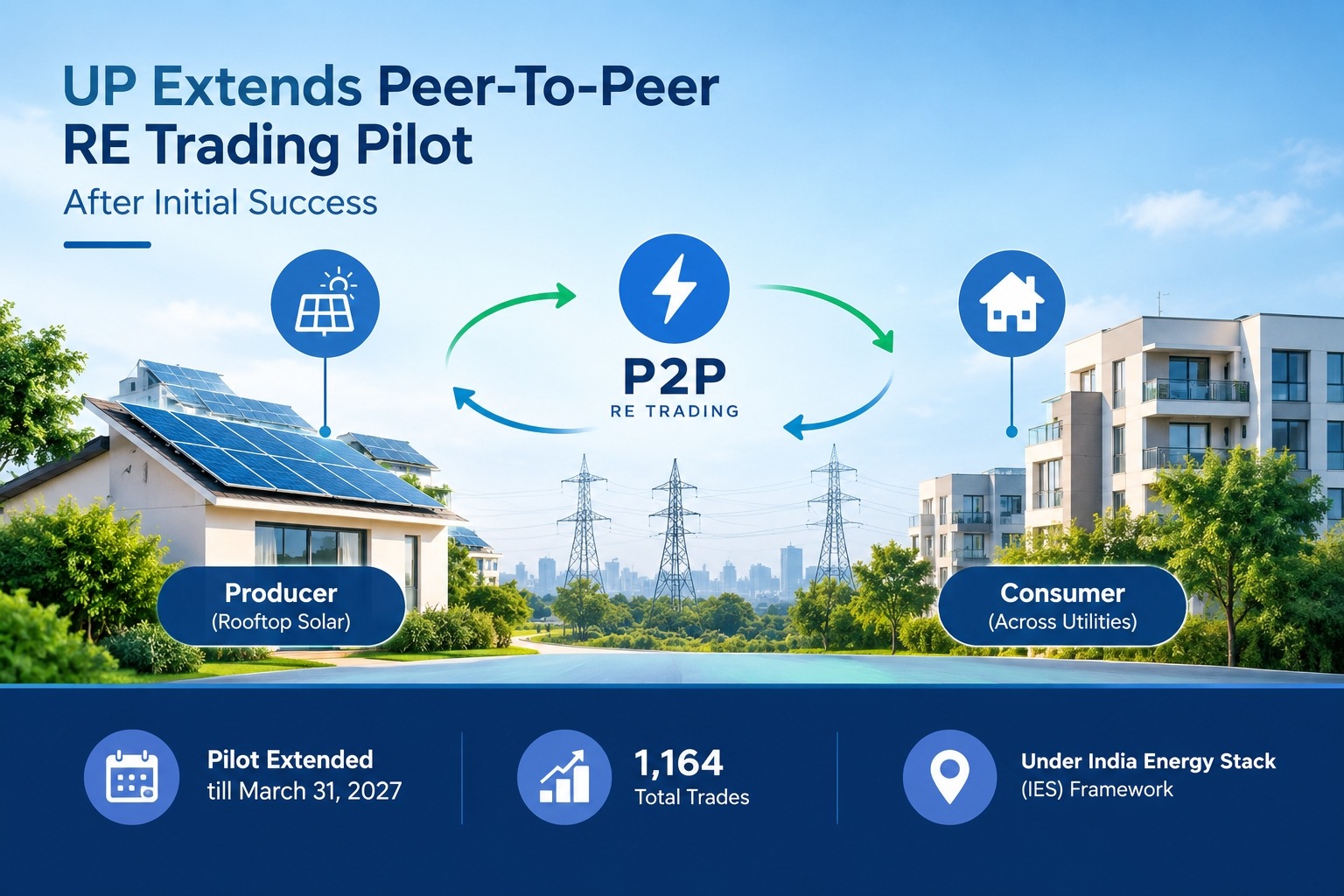
The Uttar Pradesh Electricity Regulatory Commission (UPERC) has extended the regulatory approvals and relaxations for an inter-state peer-to-peer (P2P) renewable energy trading pilot project until March 31, 2027, following encouraging results during its initial operation.
The pilot recorded a significant rise in trading activity, with the number of transactions increasing from 2 in February to 266 in April and 567 in May, before declining to 288 in June and 37 in July. PVVNL reported a total of 1,164 trades during the six-month period, with all transactions successfully settled.
In Short
- Location: Uttar Pradesh and participating Delhi utilities
- Project: Inter-state P2P renewable energy trading pilot
- Framework: India Energy Stack (IES)
- Total trades: 1,164
- Extension: Until March 31, 2027
- Key participant: PVVNL
P2P Renewable Energy Trading Pilot
The pilot is being implemented under the India Energy Stack (IES) framework to test the trading of renewable electricity directly between participating producers and consumers across different distribution utilities.
Phase I includes consumers and prosumers connected to Paschimanchal Vidyut Vitran Nigam Ltd (PVVNL), Tata Power Delhi Distribution Ltd (TPDDL), and BSES Rajdhani Power Ltd (BRPL).
UPERC had initially approved the pilot for six months through its February 16, 2026 order. The latest decision extends these approvals and relaxations until March 31, 2027, with retrospective effect from August 16, 2026.
1,164 Trades Recorded by PVVNL
According to PVVNL’s submission, regular energy trading began in March 2026, while transactions carried out between February and July were recorded and settled through adjustments in participating consumers’ electricity bills.
PVVNL reported 1,164 completed trades, with trading activity peaking at 567 transactions in May. The utility also stated that the pilot had not caused any significant adverse impact on grid security, DISCOM revenues or system operations.
Existing Electricity Network Used
The pilot does not require a separate physical electricity network. Instead, transactions are conducted using the existing distribution infrastructure of participating DISCOMs.
Smart-meter data, meter-data management systems and billing platforms are used to record, reconcile and settle the electricity transactions. The existing responsibilities of distribution licensees remain unchanged.
Extension to Support Further Testing
UPERC has treated the initiative as a regulatory sandbox, allowing participating utilities and regulators to study the technical, commercial, legal and consumer-related aspects of P2P renewable energy trading.
The extended pilot will provide additional experience in consumer participation, billing and settlement, interoperability between utilities and digital platforms, and integration of distributed renewable energy.
The project could also provide useful insights for developing larger-scale P2P electricity trading mechanisms and supporting the adoption of rooftop solar and other distributed renewable energy systems.