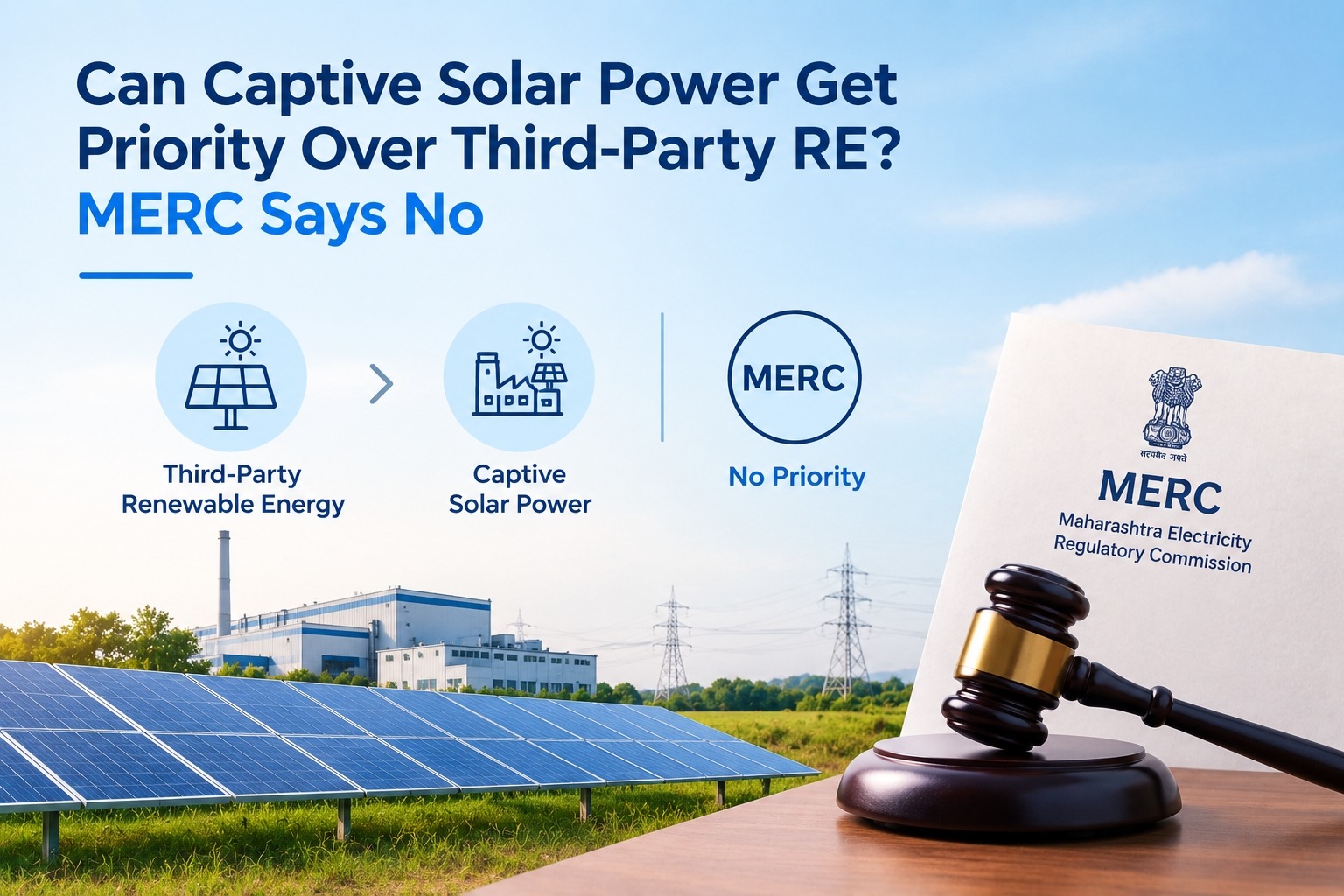
The Maharashtra Electricity Regulatory Commission (MERC) has rejected a request from Sanyo Special Steel Manufacturing India Pvt. Ltd. (SSMIPL) to give electricity from its captive renewable energy source priority over power procured from third-party renewable energy generators.
The decision clarifies how energy credits from different renewable sources must be adjusted for open-access consumers in Maharashtra.
Background of the Case
The dispute involved Regulation 14.10 of the MERC Distribution Open Access First Amendment Regulations, 2019, which specifies the order in which energy credits from different sources are adjusted against an open-access consumer’s electricity consumption.
Under the existing framework, renewable energy generators are considered before captive generating plants, followed by banked energy and other sources. Where multiple sources fall within the same category, pro-rata adjustment applies.
SSMIPL wanted its captive renewable energy to receive priority over renewable electricity purchased from third-party generators.
Sanyo Steel’s Argument
The company argued that the existing adjustment methodology could result in its captive renewable electricity being adjusted later and potentially moving into the banking mechanism.
SSMIPL also raised concerns about the possible loss of banked energy and estimated a financial impact of around ₹6.40 lakh per month.
MERC, however, stated that a commercial disadvantage does not by itself mean that the distribution company’s methodology is illegal.
Why MERC Rejected the Priority Claim
MERC said Regulation 14.10 clearly treats “Renewable Energy Generators” and “Captive Generating Plant” as separate categories in the adjustment sequence.
According to the commission, giving captive renewable energy the same priority as renewable energy generators would effectively remove the distinction established by the regulation.
The commission also noted that alternative arrangements giving captive renewable energy higher priority had been considered during the regulatory process but were not incorporated into the final regulations.
Captive Power Requirements
SSMIPL also argued that the adjustment methodology could affect its ability to meet the 51% consumption requirement applicable to captive generating plants.
MERC rejected this argument, stating that maintaining captive status and meeting the required consumption criteria remain the responsibility of the captive consumer through appropriate sourcing and scheduling decisions.
Treatment of Banked Energy
The commission also rejected the company’s concerns regarding the lapse of banked energy.
MERC noted that the regulations provide for slot-specific accounting of banked energy and require unused energy to lapse within the prescribed period.
The regulator found no evidence that MSEDCL had prevented SSMIPL from scheduling or drawing electricity according to the applicable rules. As a result, MERC found no basis for compensation, refund or other corrective action.
Why the Decision Matters
The ruling reinforces the distinction between renewable energy purchased from third-party generators and electricity generated through captive renewable plants under Maharashtra’s open-access framework.
For industrial and commercial consumers using a combination of captive solar power and third-party renewable energy, the decision could affect how their energy credits are adjusted and how much electricity is carried forward through banking arrangements.
In Short
- Regulator: MERC
- Company: Sanyo Special Steel Manufacturing India
- Issue: Priority in adjustment of renewable energy credits
- Decision: Captive renewable power does not receive priority over third-party renewable generators
- Key regulation: Regulation 14.10 of MERC’s Distribution Open Access Regulations
- Impact: Relevant for C&I consumers using captive and third-party renewable power under open access.